With rising fuel prices many organziations world over are thinking of switching to a 10 hour per day and 4 days per week routine.
Maybe it is time for India to do that too.
By compressing the working hours into 4 days, organizations can completely cut off the consumption of petrol and diesel. Government offices can remain closed during the weekend starting from Friday.
By changing the working hours, the stress on the public transport system will get more evenly divided. With the banks and other commercial establishments like the Stock Exchanges working only partially anyway, their working days and hours need not change. Therefore you will have government staff reporting to work at 8 a.m. instead of 9 and leaving at 6 p.m. instead of 5.
It will require some changes in the way the public transport system works but I am sure it will be well worth the saving that will ensue. There will be other benefits too, like cleaner environment with their being less pollution, better utilization of available resources, community development due to more time being available with people etc.
But the saving will come only if the burden does not shift from the corporations and governments to the individual. In the end if the individual ends up consuming the same amount of petroleum resources then no purpose would have been served.
But it is definitely an option worth pondering.
Saturday, July 05, 2008


Are you ready to shred some money?
In 1976 when my father quit the Indian Navy to join Britannia Sea Foods, his salary was 1200 per month.
We moved to Malad, a suburb of Mumbai and bought a flat for 39,000 having an carpet area of 450 square feet. This worked out to 85 rupees to a square foot. In terms of his salary it worked out to approximately 3 years of salary spent towards owning a house.
Out of this 1200 rupees, my mother saved 600 every month after meeting all expenses of sending three children to school. We never had a shortage of anything in the house.
As we grew, prices and salaries began to rise.
Today it is common to meet a fresh graduate who is earning 20,000 a month doing a call center job in Malad. Property prices are in the region of 6000 to 9000 rupees per square foot. If he was to buy a similar property that my father purchased he would have to shell out 44,21,250 ruppes for the same house. In terms of salary this would translate to 18 years of salary going towards purchasing the property. Thus if price parity was to be maintained the call center employee should be receiving a salary of 120000 or property prices should not have exceeded 7,20,000 in 2008. Neither of this is true.
Therefore it can be safely concluded that either the property prices are in a bubble or salaries are much below par. We all know at if a call center employee was to receive a salary of 1,20,000 per month, then the job would not have been outsourced to India in the first place.
In the above calculation I have taken a median price of 7500 and multiplied it with 590 square feet (adding 31% for super built up factor which builders charge for now a days).
Even if I consider that the call center employee was married and had an earning partner with an equal earning capacity, it would still take 9 years of their combined salary to pay for the same house.
Why has this happened?
It would be interesting to read this article on www.inflationinindia.com to find your answer.
And after that you should be ready to shred all the cash that you have because RBI is not going to do it for you!
Monday, June 23, 2008
Mumbai is in Danger
Whether you call it Bombay or Mumbai, recent reports suggest that by 2018 most of the city will be under water on a daily basis as and when there is a high tide.
Earlier this scenario had been predicted for the year 2090 but recent measurements of increase in sea level from global warming effect suggest that the flooding will happen much sooner than expected.
Wanton destruction of mangroves, reclamation of land and thoughtless development will ensure that most of the prime property will be under water in the next 10 years or so.
High tide measurements suggest that water levels during high tides have risen rapidly by 30 cm in just 3 years. If this trend continues Mumbai (Bombay) will be under water every day beginning as early as 2012. Strom water drains that are designed to take water away from the city are already flowing in the reverse direction. And if it rains, water will continue to remain on land flooding it because storm water drains will need to be closed to prevent sea water entering the island city.
But the powers that be will continue to sleep over this problem till it becomes impossible to manage. Vinod Khanna's of the world will continue to buy property at 1,28,000 per square feet oblivious of the fact that the building they are buying property in is soon going to be marooned.
Politicians will continue to flout all environmental protection laws to fill their own pockets.
And then one day, all will be lost under water.
But we will continue to live till that day in collective amnesia of the impeding problem. We will find comfort in the fact that there are almost 20 million of us who are facing the same problem and someone will definitely do something before the issue becomes unmanageable.
Well good luck to all of us.
Friday, June 13, 2008
How ABN Amro and Other Foreign Banks including Indian Private Banks cheat customers
When you take a personal loan from any Foreign or Indian Private Bank including ICICI, HDFC, Kotak Mahindra, please be sure of the fact that they have decided to cheat you right at the very outset itself.
When you take a loan, you are given a cheque which is normally dated for the second or the third week of the month. By the time the money is in your account, it is the end of the month.
And as per agreement executed by you, the bank is now ready to take back the first installment. This is where the cheating happens.
First, the bank does not give you the full amount of the loan, deducting the processing charges at source along with the service tax and all other levies.
Secondly, the bank takes back the first installment in the first week of the month that follows the disbursal date. Therefore in effect you are paying back the bank interest on the entire amount within 7 to 10 days of getting the loan.
This is a standard sharp practice deployed by all the banks other than nationalized banks.
With nationalized banks you may face a delay but they will never cheat you. Do you know why? Because promotions in Nationalized banks are not linked to returns generated by an individual. Whereas in MNC and Private Indian Banks, fresh MBA's are hell bent on increasing the profit of the bank in the hope that they will be able to climb the ladder of success faster, and they do!
KV Kamath takes home 10,00,00,000 per month as salary, how is that for success! He also holds stock options in the bank that he is heading. Do you think the owners of these banks pay these salaries?
If you said yes, you are completely wrong. It is the customers of the bank that make it possible for the company to pay Mr. Kamath the salary quoted above. And what does Mr. Kamath and his team do? Find new ways of cheating the customers that are paying for his salary!
Friday, June 06, 2008
Tips on saving Petrol while driving
Don't go over 60 Kilometer Per Hour Speed. For Every 8 Kilometer Per Hour over this speed you lose 10% of your fuel economy. Slowing down saves petrol.
Maintain steady speed. Do not accelerate unnecessarily especially when you know the route and know that very soon you will be reaching a signal. Keep coasting at a steady speed.
When going down hill or on a slope led the vehicle travel in Neutral. You can also turn off the engine, but be aware that doing so can be risky if power is required to control the vehicle. For example you may be having a power assisted steering that may not work when vehicle is switched off.
Take a longer route if you are sure of a smooth ride. Avoid stop and start traffic. Taking a longer route saves petrol even though you have taken longer to travel and clocked more kilometers rather than getting stuck in traffic.
Keep a close watch on your tyre pressure. Under inflated tyres lead to higher fuel consumption.
Keep changing Engine Oil more often than recommended. Use thinner oil as it promotes engine efficiency. Replace oil as it ages to maintain low viscosity.
Do a car pool where ever possible.
Thursday, June 05, 2008
For a Change Left is Right
Global oil price rise has lead to oil marketing companies seeking an increase in oil prices of Petrol, Diesel, Kerosene and LPG and the Government of India has obliged them. Petrol prices have been increased by 10% and similar price hikes have been done across the spectrum.
The Left Parties have been vociferous in terming this price hike as a loot of the common man. Are they right when they make this accusations.
Let us remove the wheat from the chaff.
India imports 70% of its oil requirement. 30% of the demand is met locally.
But you will be surprised to know that ONGC sells the 30% of the local crude to the oil marketing companies at International Rates. Thus we are paying ourselves a higher price for buying oil from ourselves for ourselves. Does that make any sense to you? If it does not, it does not make any sense to the Left Parties too. When ONGC charges the full international price, it makes insane profit at your expense and later on pays the profit to the government as dividend. But in the process ONGC gets access to funds that do not rightfully belong to it in the first place. It has the liberty to spend these funds as it wishes as these are its profits.
Secondly, Petrol costs 20.16 at the refinery gate, oil marketing companies, dealer profits, taxes, duties and commission add another 25.36 to it before it is sold to consumers at 45.52. (Source Hindustan Times, Business Pages 5th June 2008).
Can someone explain how the oil companies are losing money when the cost of Petrol to them is just 20.16 at refinery gate?
If all the taxes and duties were to be removed from Petrol, it would become available at let's say 27 rupees per liter.
If Petrol was available at such a price you can imagine the boost the economy will get. In effect when oil prices rise, economies suffer leading to lower tax collection and lower living standards.
For the government it is a catch22 situation. And for the moment I firmly believe that the Left is Right unless someone can show me otherwise.
Monday, June 02, 2008
The Loot is over
For 24 Years, Private and Foreign Banks such as Citibank, Standard Chartered Bank, ICICI, HDFC, HSBC, Kotak, ABN Amro, GE Countrywide, IndiaBulls, etc. have flouted interest rate regimen and looted the people of India in the guise of giving soft loans at exorbitant rates of interest.
These rates have ranged from 20% to as high as 80% all in the name of unregulated interest regime allowed by the Reserve Bank of India.
As an association of people utilizing credit from these banks, we have been petitioning RBI to stop this practice of giving usurious loans to unsuspecting people. We have staged countless demonstrations in front of these banks and have maintained constant pressure on the RBI since 2003.
Under the able leadership of Mr. Vijay Kamble and the hard work of his team CCAI has been finally successful in getting the monolith RBI to take note of the problem plaguing the system.
RBI has now pegged the maximum rate of interest at 18% per annum diminishing. What this means is that if your loan is at any other rate, you can have it reduced to this rate as anything more than this is considered usurious by RBI.
We are seeking a similar reduction on credit card rates too and very soon you can expect relief from high interest rates there too!
CCAI has been working tirelessly since 2003 for protecting the exploitation of the general public at the hands of MNC and Private Banks. Join us in our fight against the heavily biased banking system that favors the bank and penalizes the common man.
Call us now!
Credit Consumers Association of India
3/141, M.H.B. Colony, Ram Mandir Road,
Kher Nagar, Bandra (East), Mumbai 400051
Tel: 91-22-26474857, 26471908, Email: ccai.mumbai@gmail.com
Subscribe to:
Posts (Atom)
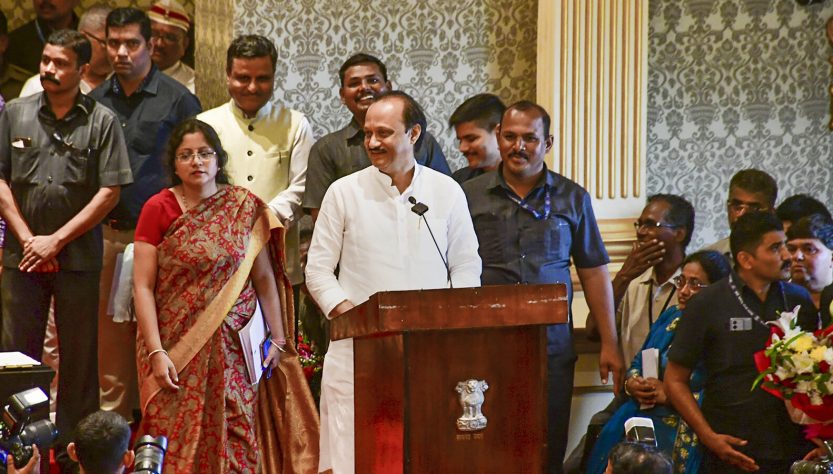
The Pawarification of Indian Politics.
Maharashtra State elections have thrown up surprising results, results that have defied all opinion polls and even surprised the winnin...
-
 This is the list of survey numbers issued by the collectors office for those affected by the recent forest land issue in Mumbai.
-
In 1956 Government of Maharashtra reserved land in Mumbai for forests and acquired private lands adjoining the National Park from private pa...
-
NEW DELHI: It is probably the best news for Mumbai's leading builders who had invested thousands of crores of rupees on buying prime plo...